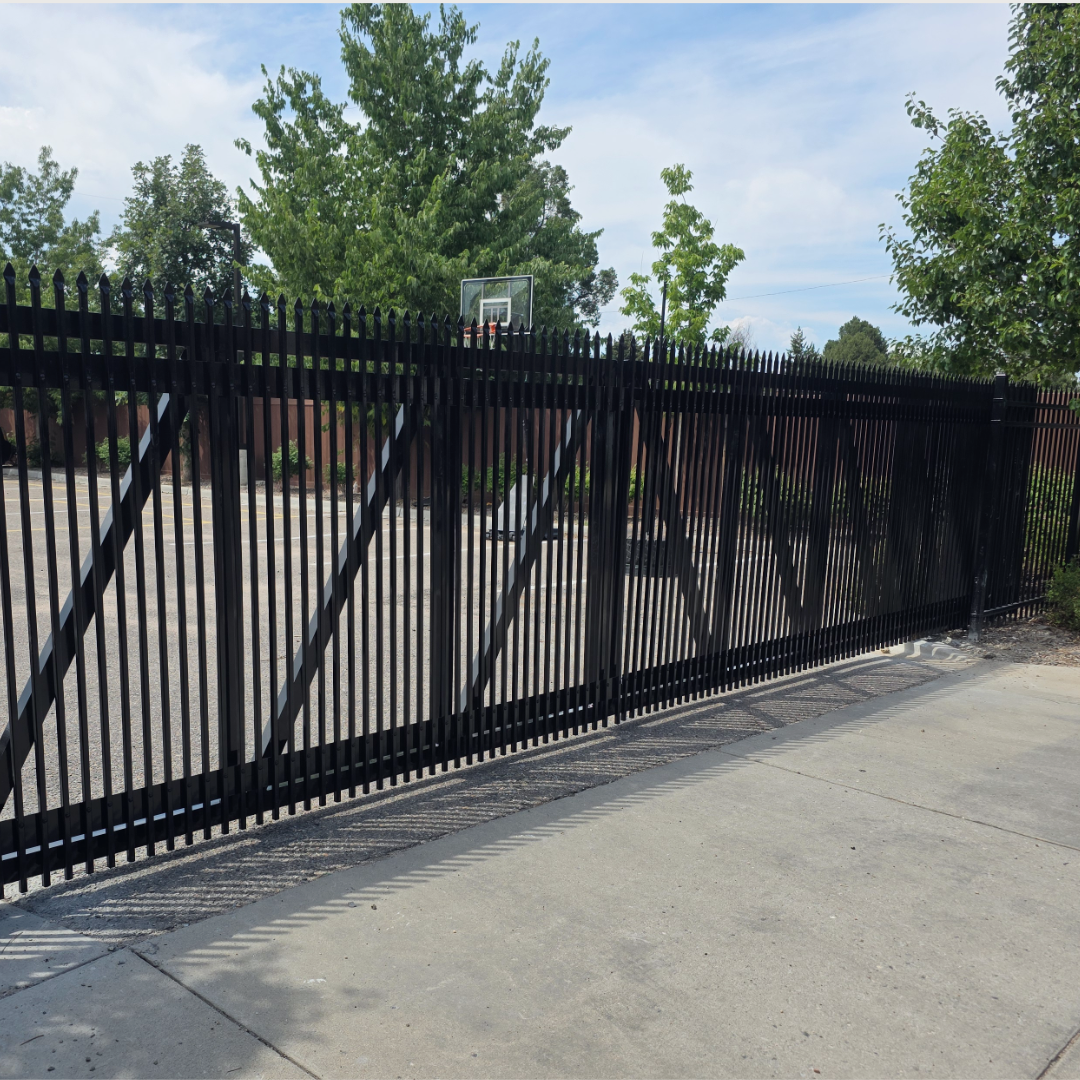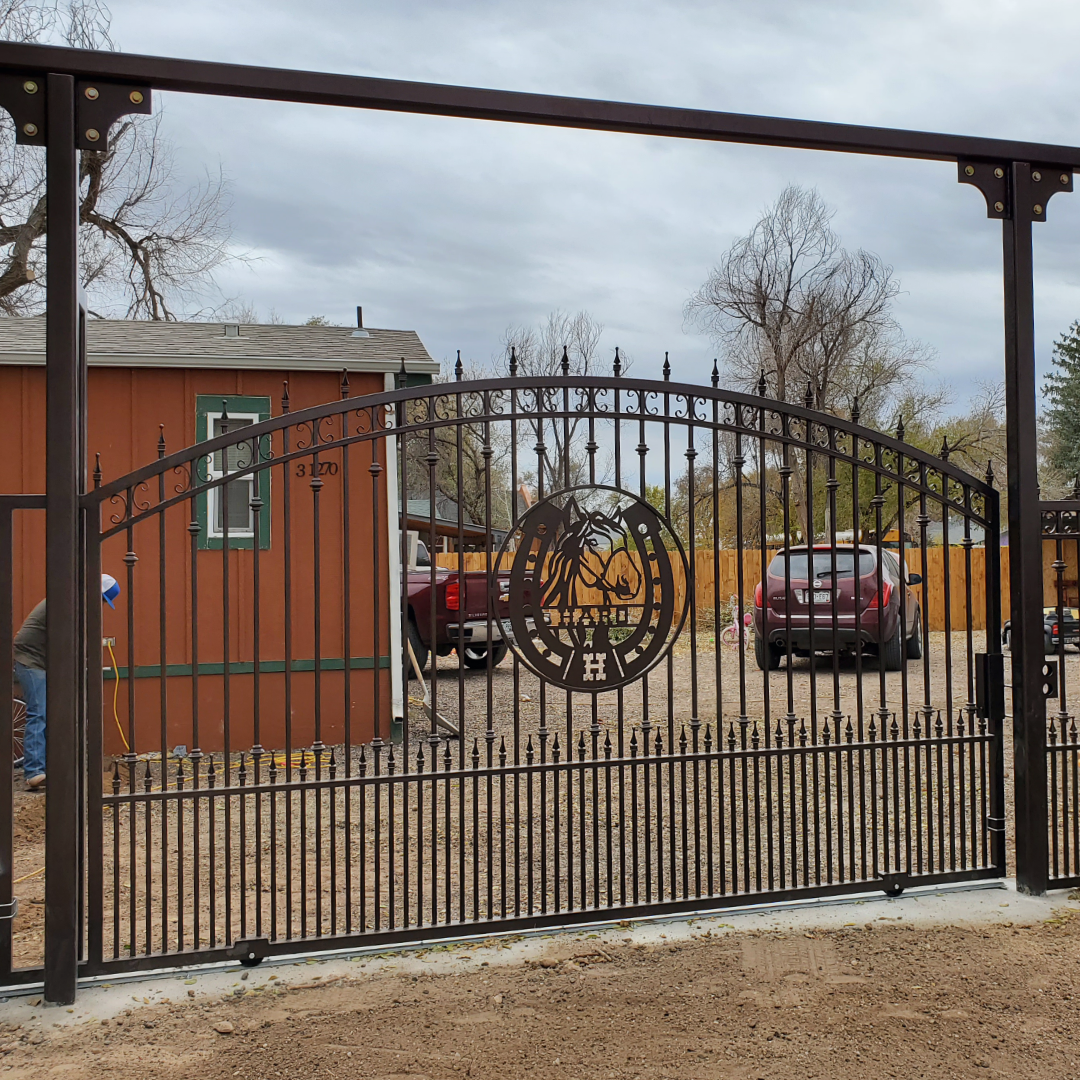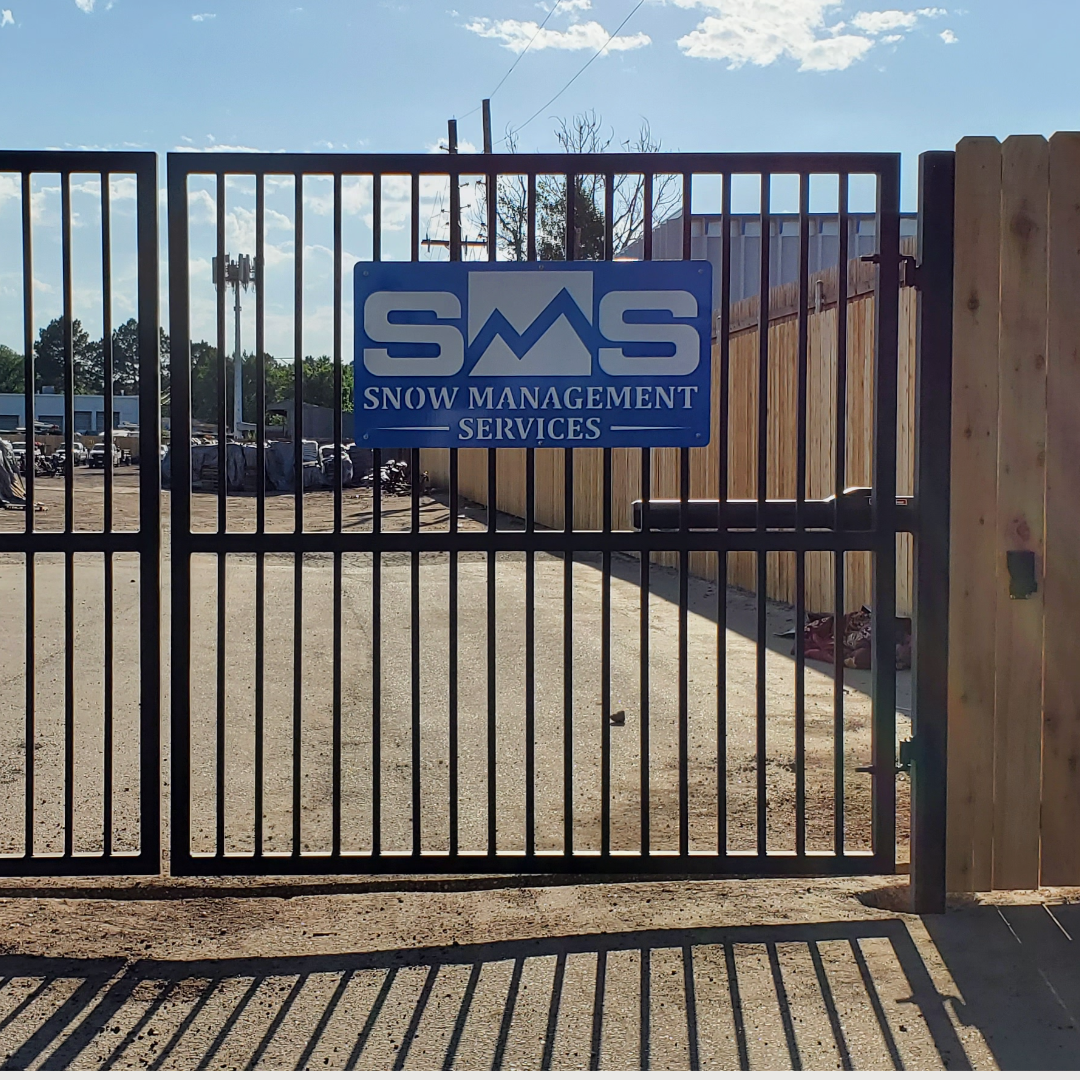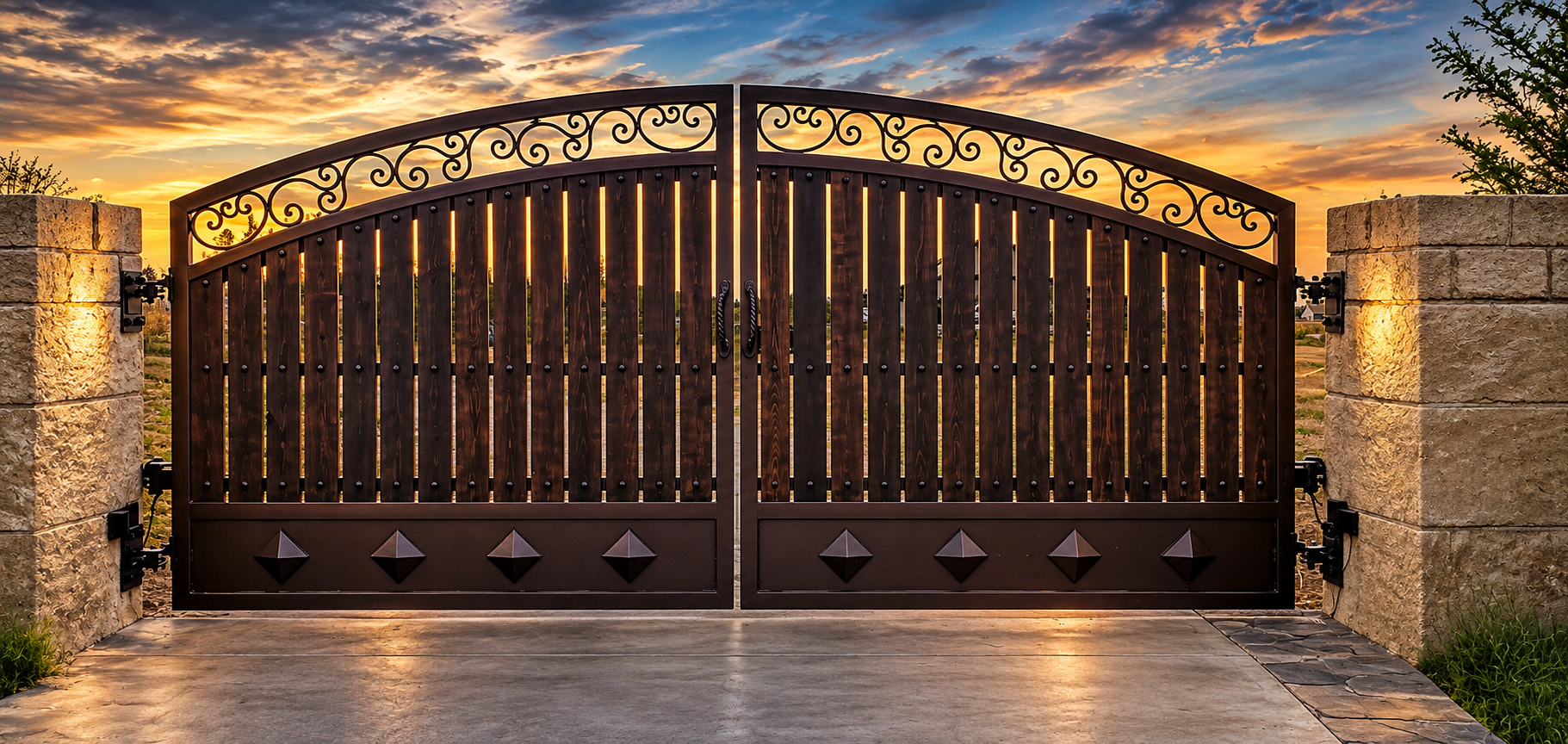
The entrance and fence are the first things anyone notices about a ranch, farm, or rural property – and they do more work than anything else on the place. The right entry gate and fence combination controls access, contains livestock, stands up to Northern Colorado weather, and sets the tone for the whole property. The wrong one fights you every day. Here’s how to think through the decision.
Understanding Your Needs
Start with what the fence and gate actually have to do, because that drives every other choice:
- Cattle – need heavy, welded steel fencing and stout gate posts that can take weight, rubbing, and pressure at the corners. Continuous-panel steel fence is a popular upgrade over barbed wire for high-traffic areas like corrals and along the driveway.
- Horses – need highly visible fencing with no sharp edges or narrow gaps that can trap a hoof. Smooth steel rail keeps injury risk down where barbed wire can’t.
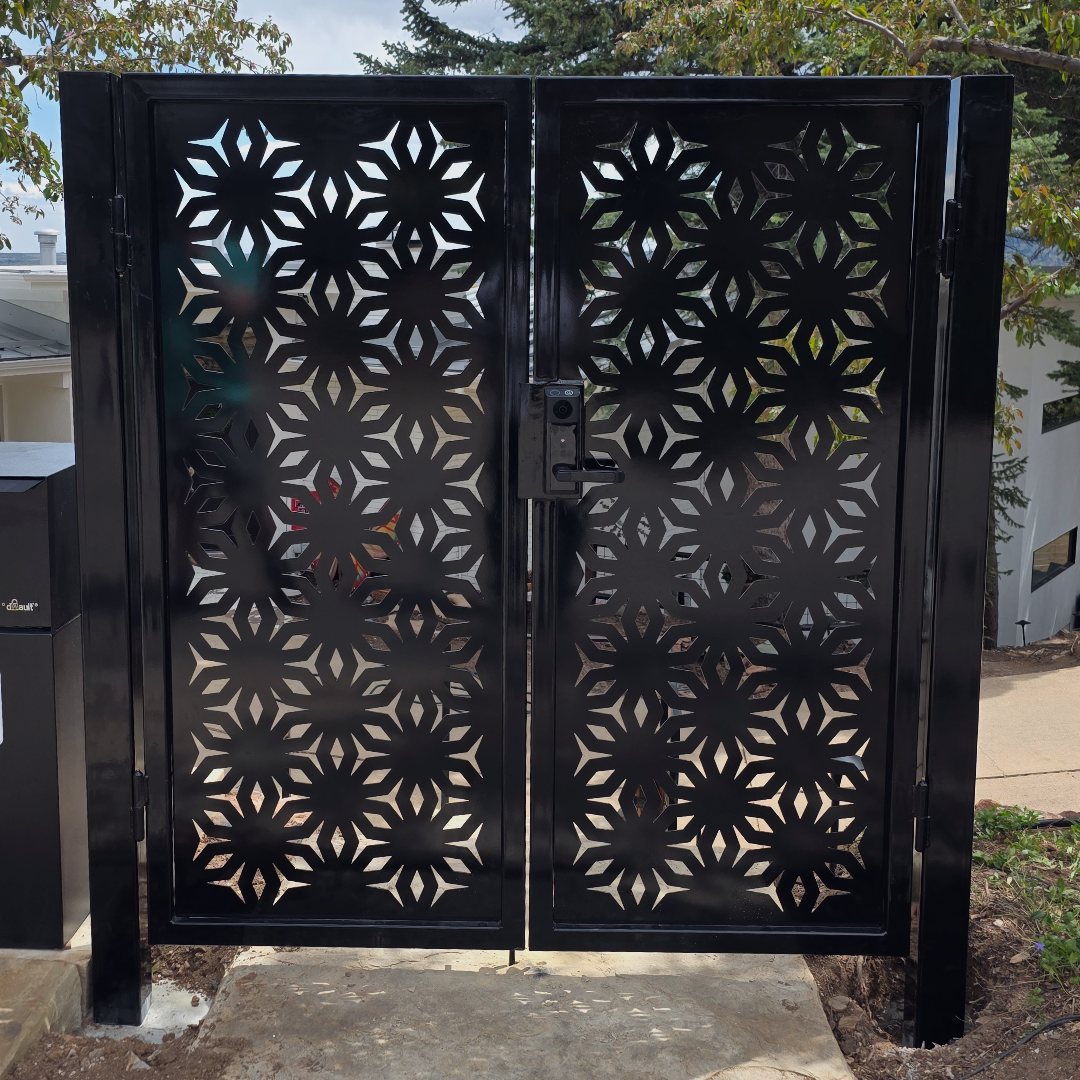
- Residential and acreage properties – the priorities shift toward security, privacy, curb appeal, and keeping kids and dogs in – which opens the door to decorative CNC-cut panels and ornamental steel.
- Commercial and ag operations – think duty cycle and equipment traffic: how many vehicles per day, how wide, and how heavy.
Anatomy of an Effective Entry
A ranch entrance is a system, not just a gate. The pieces that matter:
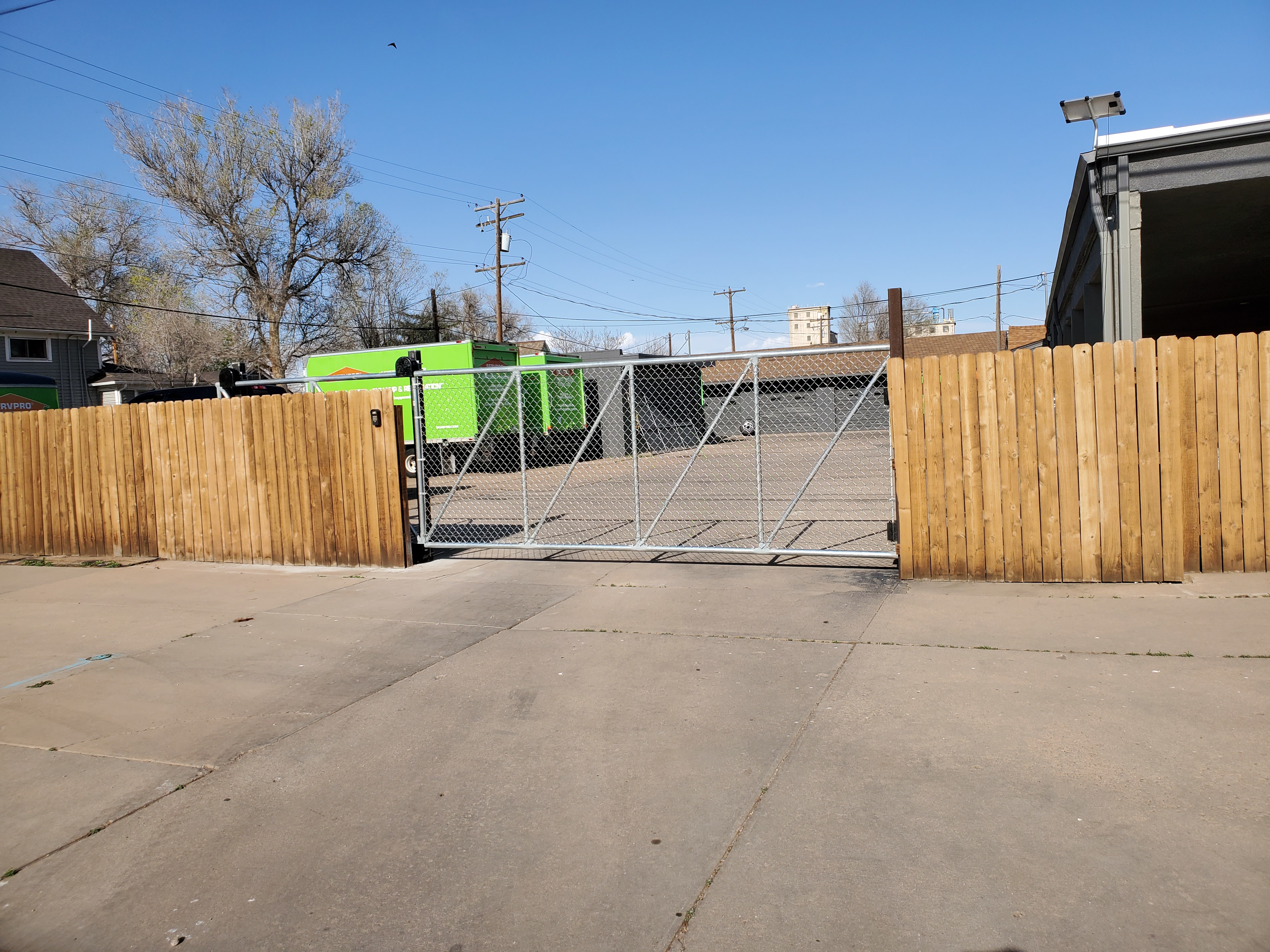
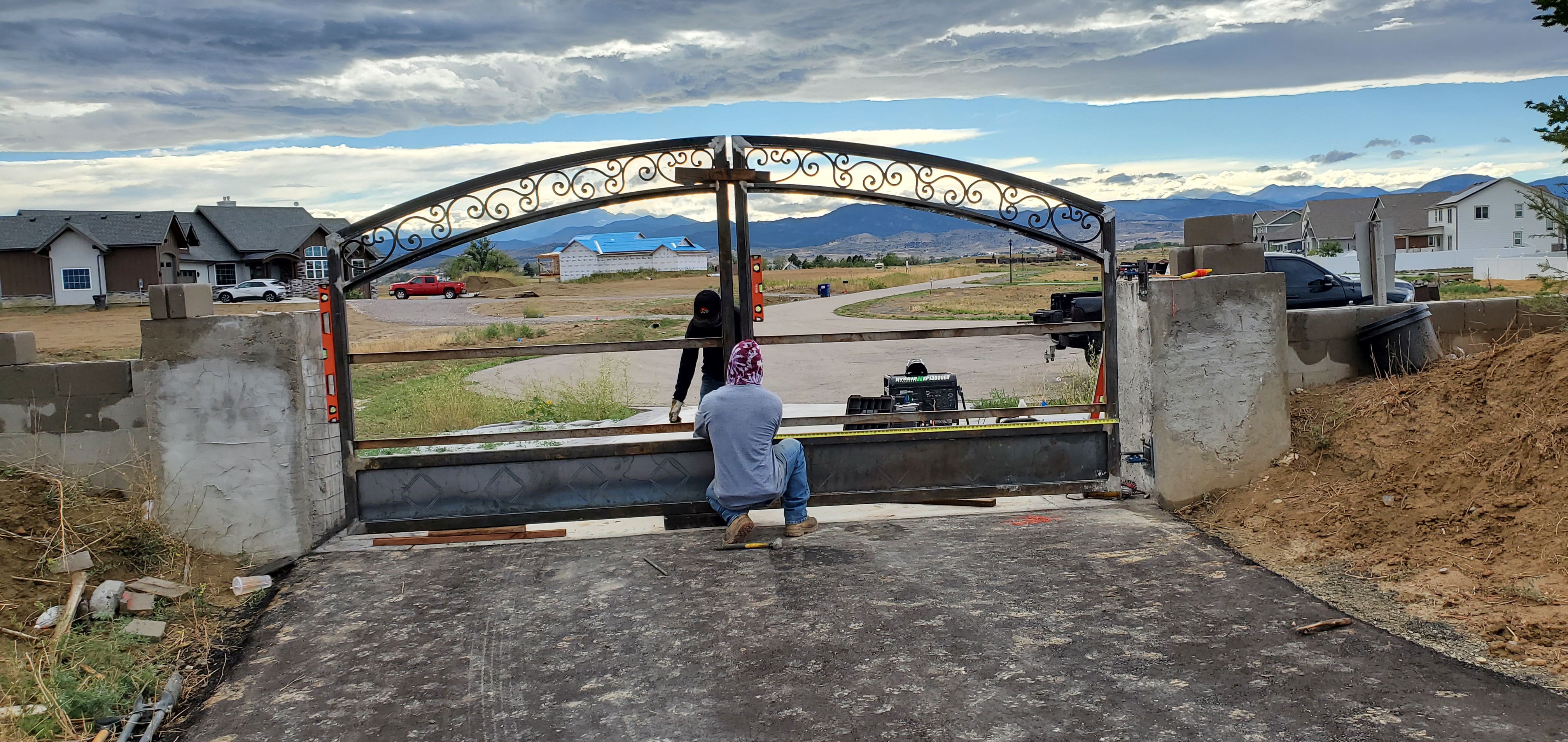
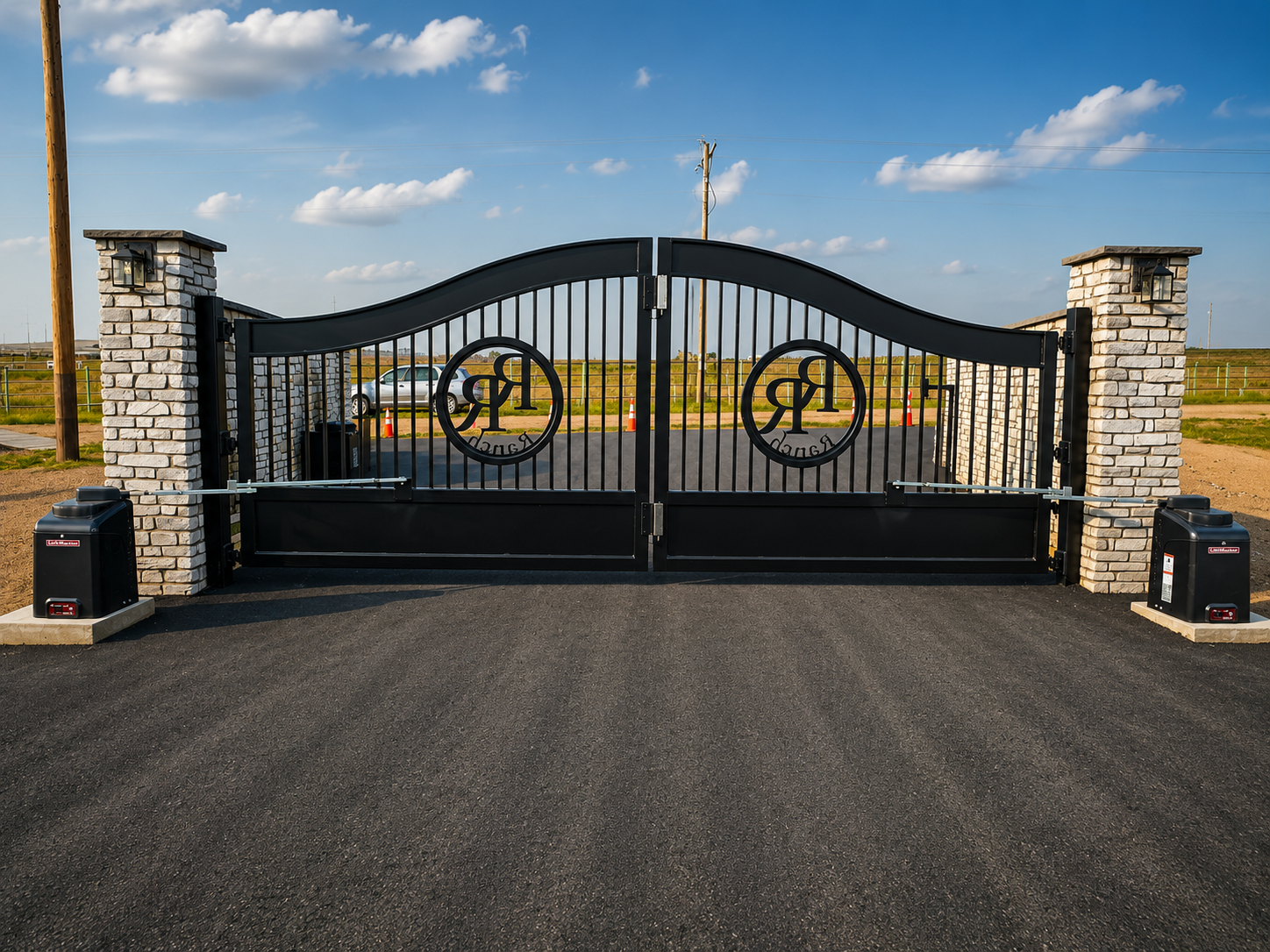
- Swing gate vs. sliding gate – swing gates are the classic look and simpler to automate on level ground with room to travel. Sliding gates win on sloped driveways, short setbacks near the road, and spots where drifting snow would block a swing path.
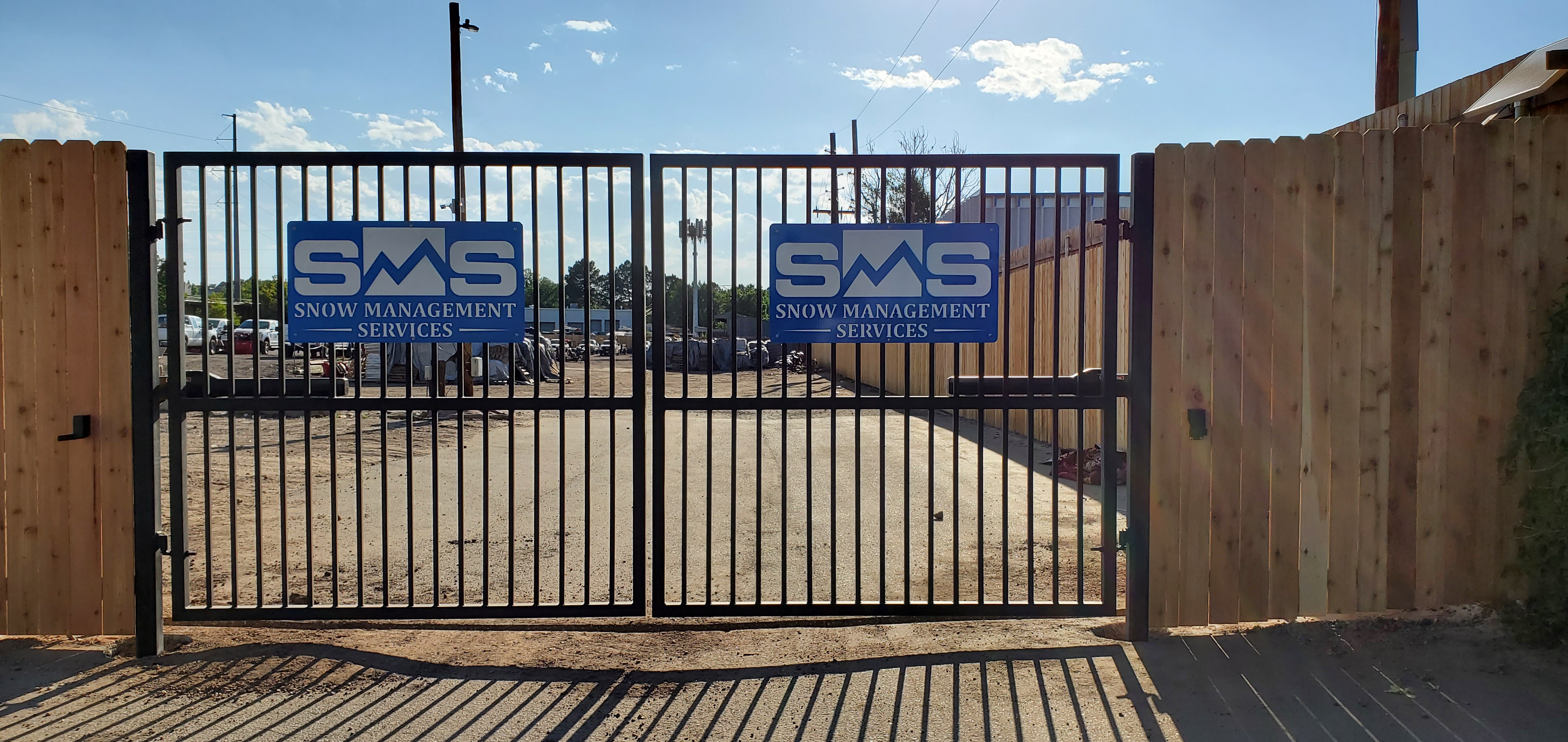
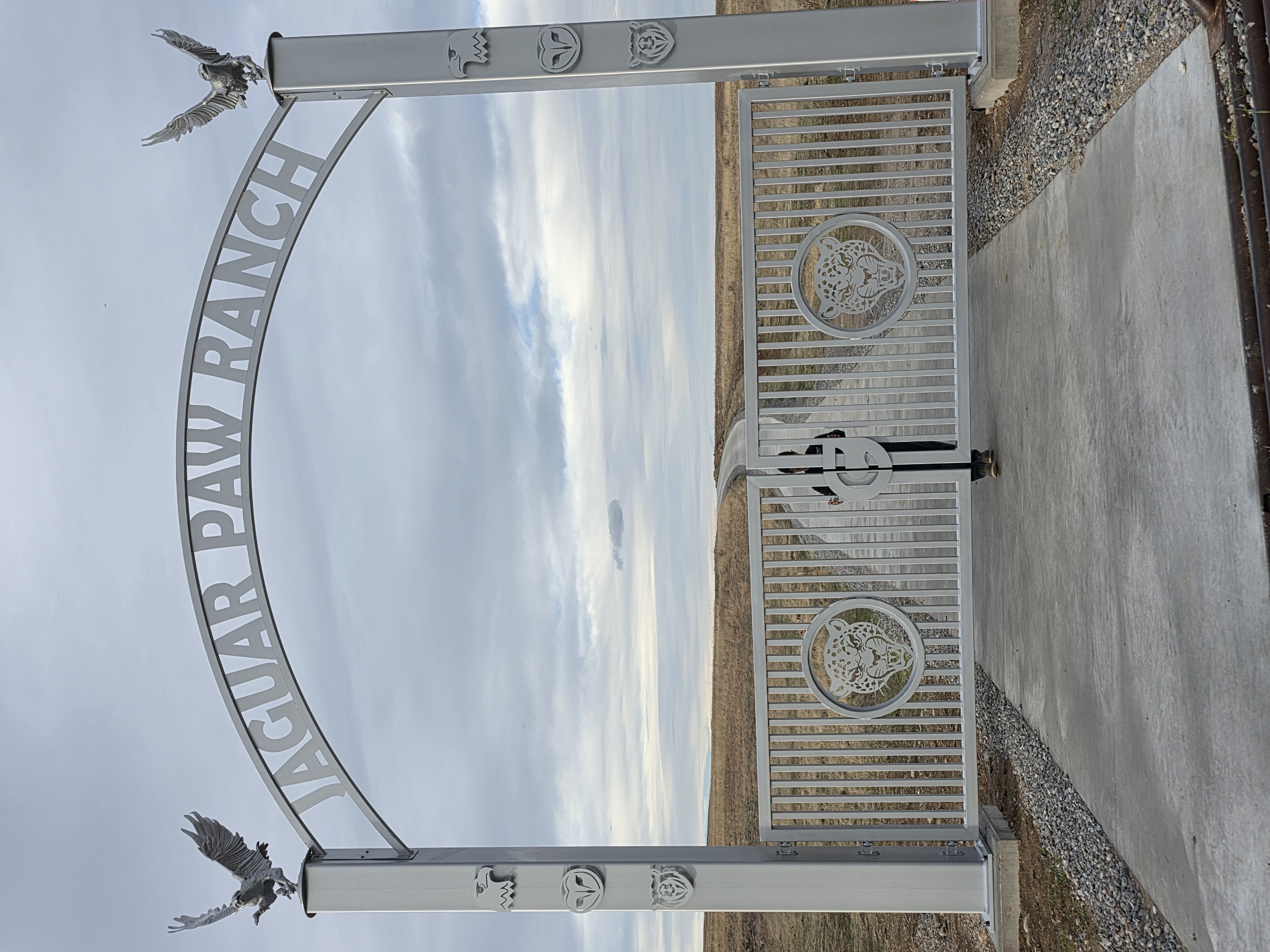
- Single vs. double gate – a single panel is simpler and has one hinge point; a double (bi-parting) gate halves the swing radius and looks balanced under an entry arch. Wide openings for equipment usually call for a double swing or a slide.
- Driveway width and equipment clearance – measure for the widest thing that will ever come through: stock trailers, hay equipment, delivery trucks, fire apparatus. A 12-foot opening that fits your pickup will not fit a swather. We typically recommend 16–20+ feet for working ranch entrances.
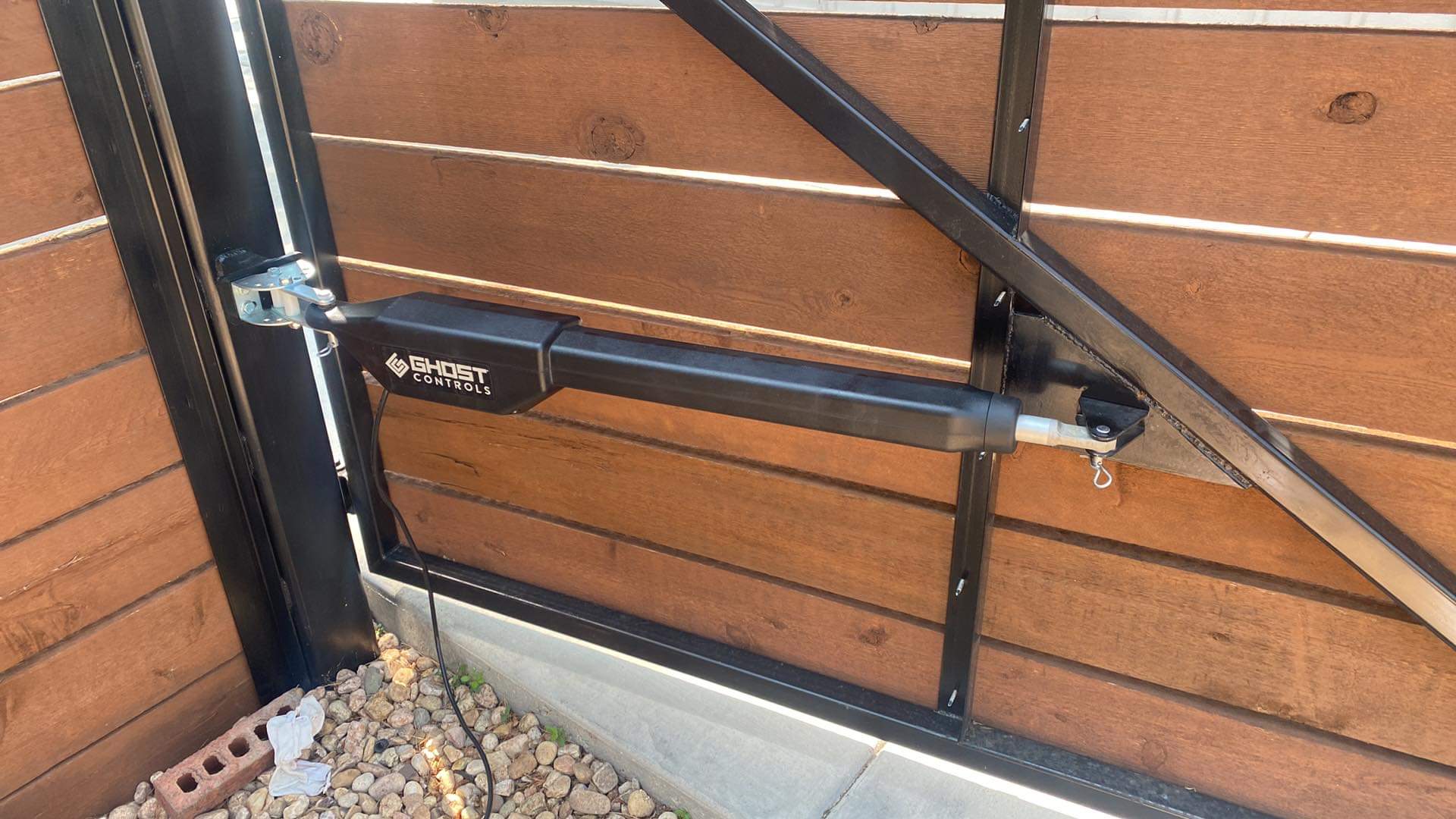
- Manual vs. automated – a manual gate is cheaper up front, but a gate you have to get out and drag open in a January wind tends to get left open. Automation means the gate closes itself behind you, every time. (We covered operators, access control, and safety sensors in depth in our Northern Colorado guide to automated gates.)
- Cattle guards and pedestrian access – a cattle guard keeps livestock in while letting vehicles pass without stopping, and pairs well with a gate for when you need a hard closure. A separate walk gate saves you from cycling a 20-foot gate just to check the mail.
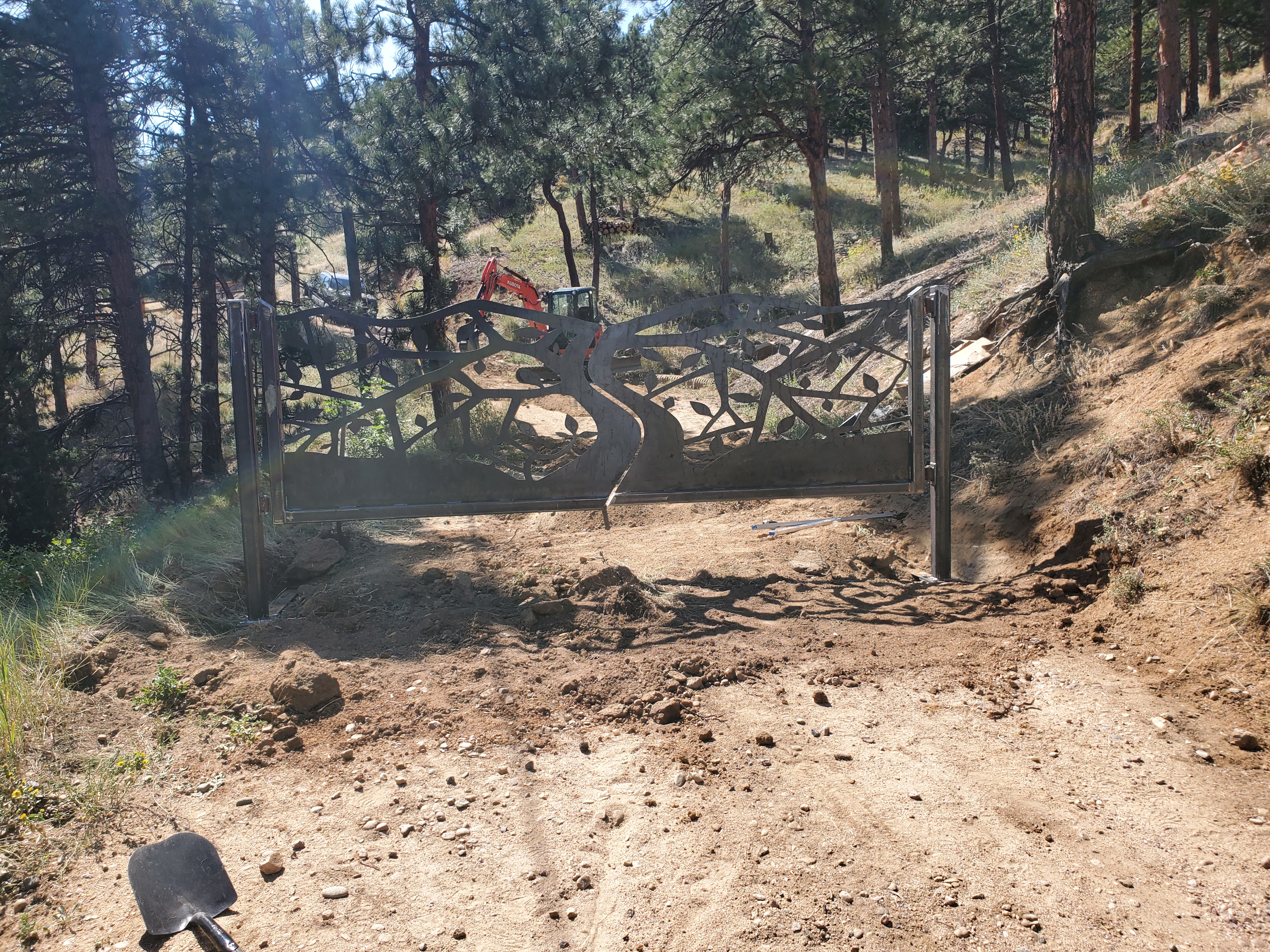
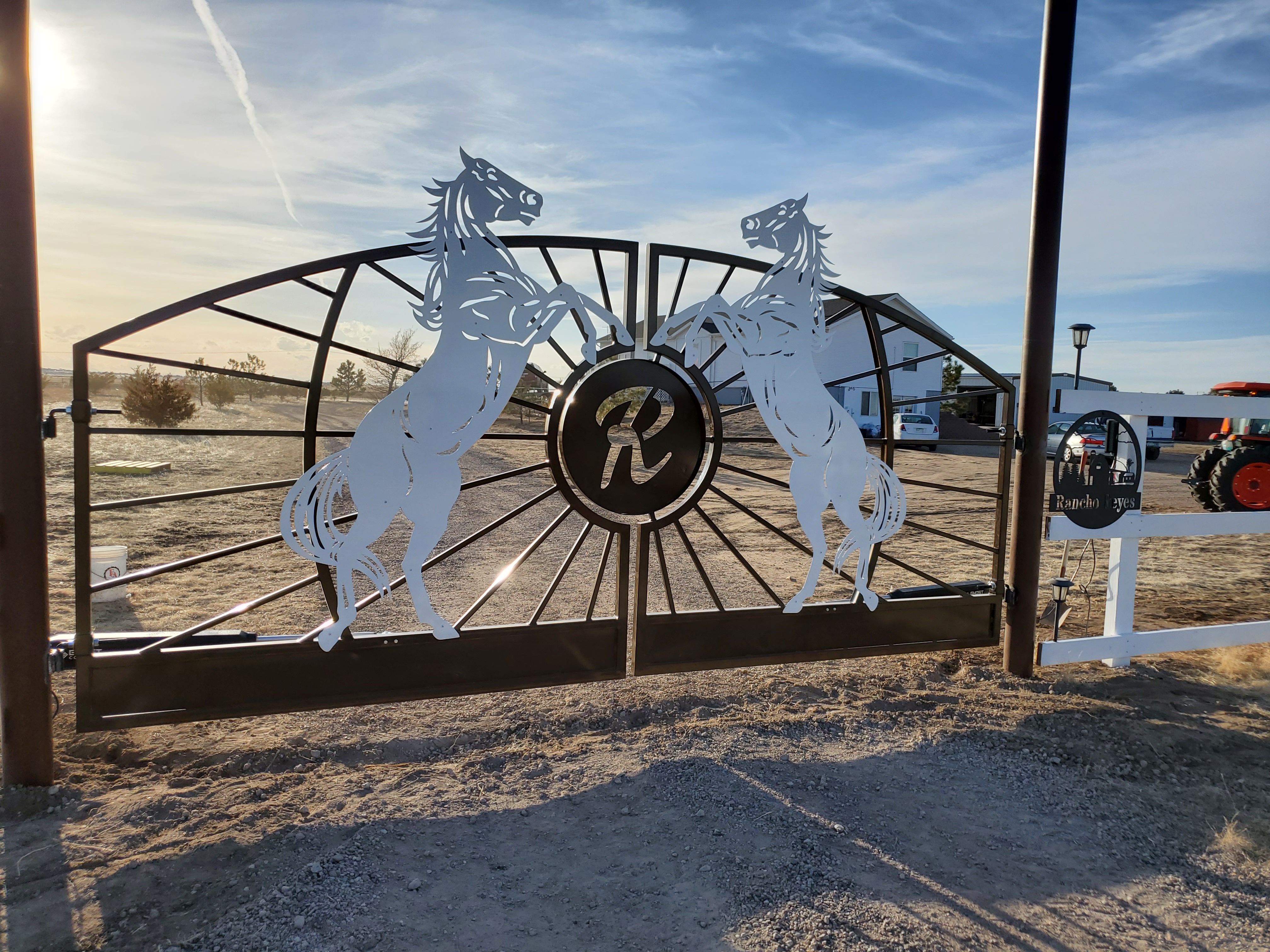
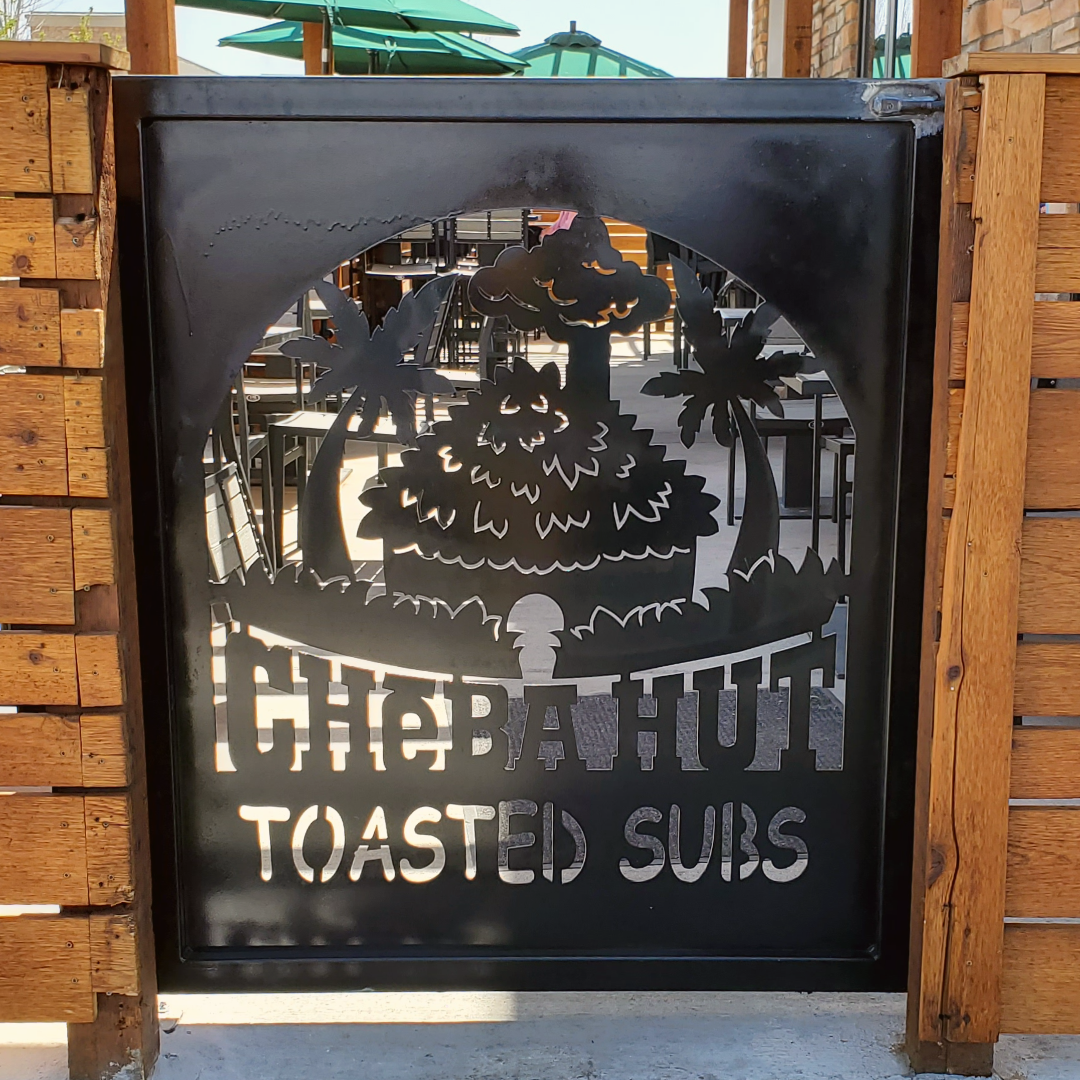
- The entry arch – an overhead arch or sign panel spanning the gate posts is the signature of a ranch entrance. With in-house CNC plasma cutting we can put your ranch name, brand, or mountain scenery directly into the steel.
Designing Your Fencing
Northern Colorado terrain and weather will test whatever you build, so design for the site, not the catalog:
- Wind – Front Range wind loads are real. Solid privacy panels act like sails; open rail, picket, and CNC-cut designs let the wind through and stay standing.
- Snow and drift – leave ground clearance where drifts pile up, and think about where a plow will push snow relative to gates and corners.
- Drainage and frost – posts need to be set below frost depth in properly drained footings, or freeze-thaw cycles will heave them out of line in a few seasons.
- Uneven ground – fencing can either step (level panels dropping in increments) or rake (rails following the slope). Custom fabrication means each panel is built to your grade instead of forcing the ground to match a stock panel.
Selecting the Right Fence Material
Material choice is a trade-off between strength, maintenance, and appearance:
- Welded steel pipe and rail – the workhorse for cattle, corrals, and arena fencing. Strongest option, decades of service life, and what we fabricate in-house.
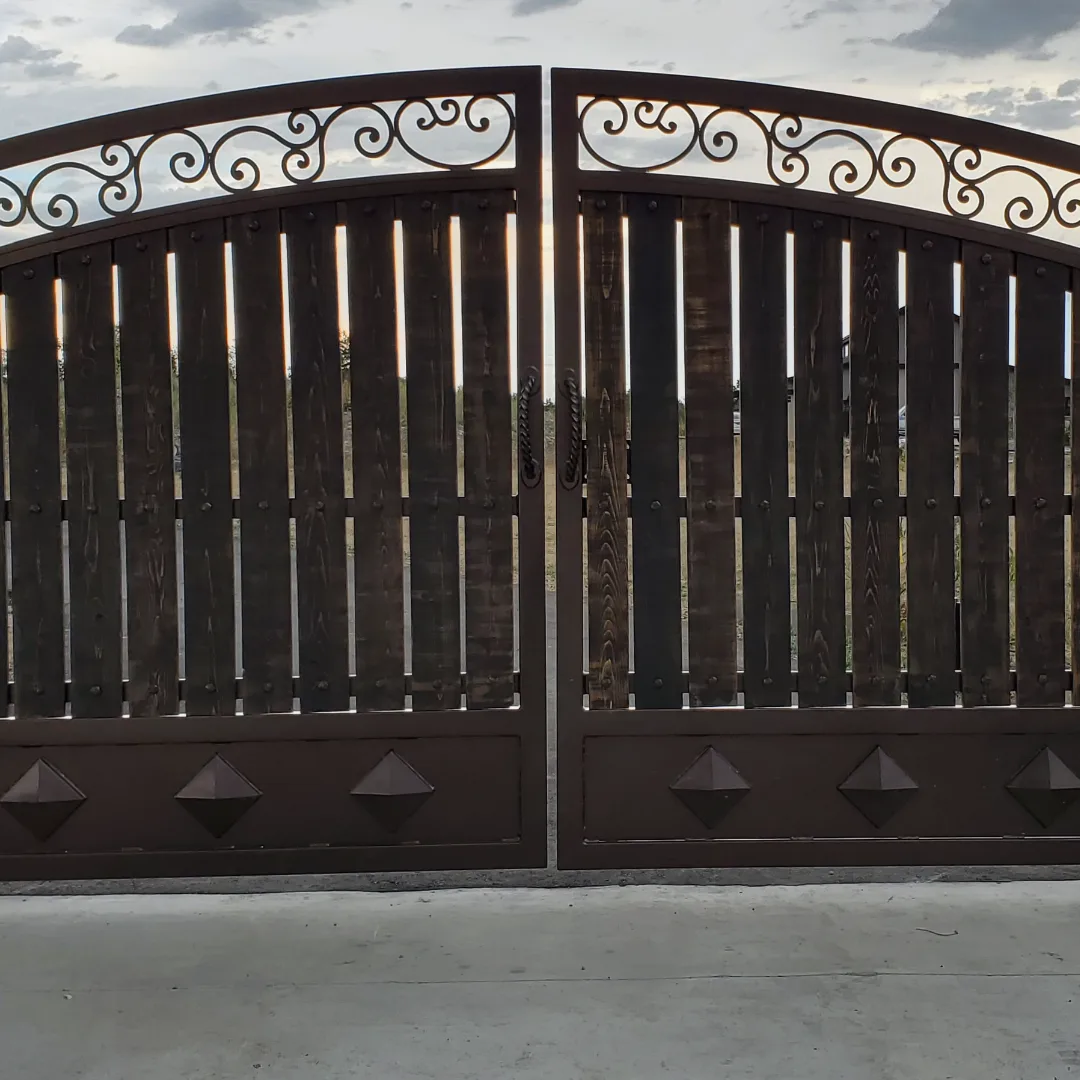
- Ornamental / CNC-cut steel – strength plus design for entries, courtyards, and residential runs where looks matter.
- Wood – warm traditional look, but expect ongoing staining, warping, and post replacement in our climate.
- Vinyl – low maintenance, but brittle in cold snaps and not a match for livestock pressure.
- Barbed and woven wire – still the economical choice for long perimeter runs; many ranches pair wire perimeters with steel at the entrance and working areas.
Powder-coated vs. painted steel: powder coating is baked on as a continuous film, so it resists chipping, fading, and rust far better than brush- or spray-applied paint – the difference shows after a few years of UV, hail, and freeze-thaw. Paint is easier to touch up in the field. For gates and entry features that need to look good long-term, we recommend powder coat over a properly prepped surface.
Maintenance and lifespan: a fabricated steel fence or gate needs little more than an occasional wash and a hinge check, and will outlast wood or vinyl by decades. Automated gates add a simple yearly check of sensors, batteries, and hardware.
Access Control and Power
If you automate, decide how you’ll open the gate and how it gets power:
- Keypads – individual codes for family, hands, and delivery drivers; change them anytime.
- Remotes and vehicle sensors – open from the truck, auto-open on the way out.
- Smartphone apps – open, close, and check the gate from anywhere.
- Emergency access – fire and EMS provisions (key switch or sensor entry) so first responders are never locked out, plus a manual release for power outages.
- Solar vs. hardwired – near the house or shop, hardwired power with battery backup is the standard. On rural Weld and Larimer County entrances where trenching power would cost more than the gate, solar operators are a proven solution – Colorado’s 300 days of sunshine make this one of the best regions in the country to run one.
Why Build It with NoCo Metal Workz
Plenty of places will sell you a gate out of a catalog. Here’s what’s different about having it built:
- Custom fabrication, not off-the-shelf – every gate and panel is cut and welded to your opening, your grade, and your design.
- One system, one shop – gate, entry arch, cattle guard, and fence designed together so they match and work together.
- Automation and access control – we build the steel and install the operators, keypads, and safety sensors that move it.
- Built for Northern Colorado weather – heavy-gauge steel, footings below frost depth, finishes chosen for wind, hail, and UV.
- Residential, ranch, and commercial – from a courtyard walk gate to a hundred-cycle-a-day yard gate.
- Local fabrication and installation – designed, cut, welded, and hung by the same Greeley crew, serving Fort Collins, Loveland, Windsor, and the Front Range.
Get a Free On-Site Estimate
Planning a ranch entrance, custom driveway gate, or new fence? Send us your property location, approximate opening width, and a few photos – we’ll help you choose the right design and provide a free on-site estimate. Call us at (970) 302-9339 or email nocometalworkz@gmail.com.